


Best LED Face Masks of 2026: The Numbers Brands Do Not Publish
Written by the Lumiglo research team. Published July 2026. Every specification below was checked against manufacturer materials and public FDA 510(k) filings.
The best LED face mask is not the brightest one. We read the nine top-ranking guides on this keyword before writing ours, and not one of them publishes the number that decides whether a red light therapy mask does anything at all.
This guide ranks nine masks sold in the United States, explains the specs in plain English, and names the brands that refuse to publish theirs.
Disclosure: Lumiglo makes one of the masks in this guide. We have ranked it fifth. Rather than pretend we have no stake, we have done the opposite of what a brand guide usually does: we publish the numbers, including the ones that do not flatter us, and we tell you exactly where every figure comes from. Nothing here is affiliate-linked. If a spec is missing, it is because the brand does not publish it, and we say so.
What is in this guide
- The one number nobody publishes
- Best red light therapy mask: every guide gives a different wavelength
- How we compared these masks: our review method
- The best LED face masks of 2026
- What "FDA-cleared" actually means
- The eye safety question almost nobody answers
- How to choose, in six criteria
- How to actually use one
- Where that leaves you
- Frequently asked questions
The one number nobody publishes
Every LED face mask guide talks about power. Almost all of them quote irradiance, measured in milliwatts per square centimeter, written mW/cm². Higher is presented as better. That is where the whole category goes wrong.
Irradiance is the power arriving on your skin at a given instant. It is not what produces a result. What produces a result is the dose: irradiance multiplied by how long the session lasts, expressed in joules per square centimeter, or J/cm².
The arithmetic is simple. A mask delivering 27 mW/cm² over a 10-minute session delivers about 16 J/cm². A mask delivering 80 mW/cm² reaches that same dose in a little over three minutes. Beyond that point, the extra intensity is not doing more work. In many cases it is doing less.
More is not better, and that is not an opinion
Photobiomodulation follows what researchers call a biphasic dose response, sometimes described through the older Arndt-Schulz principle. Below a threshold, nothing happens. Above an optimum, the effect flattens and then declines. The literature is unusually consistent on this.
The striking part is that dose alone does not predict the outcome. In the dose-response review by Huang, Chen, Carroll and Hamblin (Dose-Response, 2009), an identical dose of 0.9 J/cm² produced a clear effect when delivered at 55 mW/cm² and no effect at all when delivered at 155 mW/cm². The energy was the same. The intensity was not, and the result vanished. Reviews of the field note that negative studies are more often the result of overdosing than of underdosing.
So when a mask advertises 100 or 128 mW/cm², that number is not evidence of superiority. It may simply mean the device sits further up the curve than the studies do.
What the studies actually used
The most cited controlled trial on red light and skin rejuvenation is Wunsch and Matuschka, published in Photomedicine and Laser Surgery in 2014 (volume 32, issue 2, pages 93 to 100). It ran on 136 volunteers, with treatment and control groups, and measured collagen density with ultrasound alongside its patient satisfaction endpoints. It was also funded in full by a device manufacturer and was not blinded, which is worth knowing about the study the whole industry quotes.
The results were significant: increased collagen density with a p value below 0.001, and statistically significant gains in wrinkle appearance and skin roughness against controls.
The irradiance used in the red light arm was 5.9 to 13.3 mW/cm². Sessions delivered roughly 8.5 to 9.6 J/cm², twice a week, for thirty sessions.
Read that again, because the entire marketing of this category depends on you not knowing it. The trial that put red light on the map for wrinkles worked at under 14 mW/cm².
The lowest documented threshold below which nothing happens sits around 0.5 mW/cm², per a 2018 review in the Journal of Biomedical Optics by Zein, Selting and Hamblin. Commonly cited working ranges are 5 to 50 mW/cm² for tissue stimulation, with a practical ceiling below 100.
The takeaway before you spend anything
Ask a brand for two numbers: its irradiance and the distance at which it was measured, then the dose per session in J/cm². If it can only give you the first one, it is selling you a headline, not a measured product.
The distance problem, which is worse than the number problem
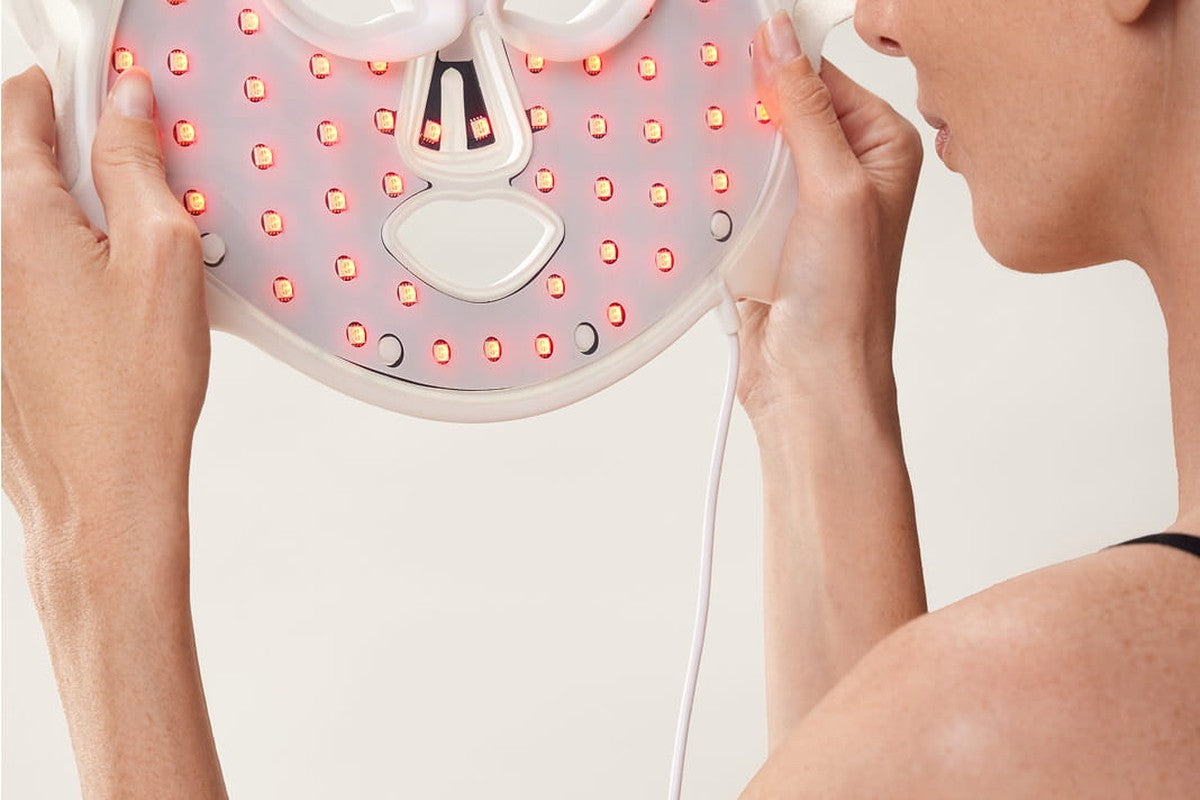
Irradiance falls off sharply with distance. A reading taken at the surface of the LED chip and a reading taken at the skin, through a diffuser, at real wearing distance, are not the same measurement and can differ by an order of magnitude.
This is not a theoretical objection. At least one major brand advertising a headline figure above 120 mW/cm² specifies, in its own documentation, that the value is measured at the source of the LED. That is the most favorable possible reading position, and it is not where your face is.
Almost no brand in this category states its measurement distance. Until one does, treat every published irradiance figure as an upper bound rather than as what your skin receives.
The mask we make, with the numbers on the table
Extra 10% off with the code LUMIGLO10
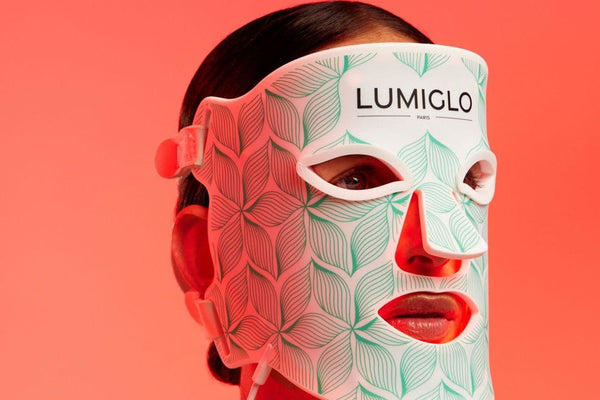
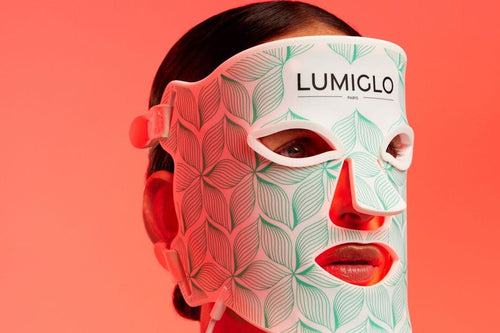
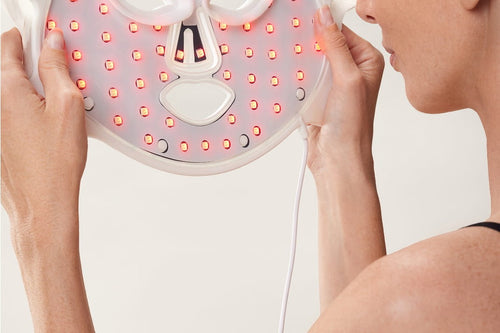
630 nm red and 850 nm near-infrared. 240 LEDs across 70 clusters. Around 27 mW/cm², which is two to four times what the reference trial needed. Ten-minute sessions.
$249 $159 · free US shipping · 30-day home trial · 2-year warranty
See the Lumiglo Pro V2Best red light therapy mask: every guide gives you a different wavelength
Here is an experiment you can run in five minutes. Search for the best LED face mask, open the first six results, and write down the red wavelength range each one tells you to look for.
You will get six different answers. Across the current top results, the recommended red range is variously given as 600 to 650 nm, around 630 nm, 630 to 680 nm, 630 to 700 nm and 630 to 660 nm. One well-known business title manages to recommend both "over 120 mW/cm²" and "20 to 40 mW/cm²" in the same article.
A reader comparing three pages of the top ten gets three different answers to the most basic question in the category. No wonder the most upvoted discussions on the subject open with some version of "I cannot tell what is real anymore".
The two wavelengths that carry the evidence
The published work on skin clusters around two peaks, for a physical reason: they sit in what researchers call the optical window, where hemoglobin and water absorb the least and light penetrates furthest.
- Red, around 630 to 660 nm. Penetrates roughly 2 to 4 mm. This is the epidermis and upper dermis, where fibroblasts produce collagen and elastin. It is the wavelength of the wrinkle and firmness studies.
- Near-infrared, around 830 to 850 nm. Penetrates deeper, roughly 5 to 10 mm. Invisible to the eye, which is why some buyers assume their mask is not working when the infrared mode is on.
Both are absorbed by cytochrome c oxidase, an enzyme in the mitochondrial respiratory chain. That absorption is the proposed mechanism behind the whole field.
Anything outside those two bands is a bonus, not the core. Blue around 460 nm targets blemish-prone skin. Yellow around 590 nm is used for the look of redness. Green is used for evenness of tone. They are legitimate, they are simply not what the anti-aging evidence rests on.
If you want the mechanism explained properly rather than in a bullet point, we wrote a longer piece on how red light interacts with mitochondria.
How we compared these LED face masks: our review method
We did not test these devices with a spectroradiometer. Almost nobody who writes these guides does, and the ones who claim to rarely publish their instrument, their calibration date or their measurement distance.
What we did instead is narrower and, we would argue, more useful: we recorded what each brand publishes about its own product, and what it does not. Every figure below comes from the manufacturer's own materials or from public regulatory filings. Where a brand does not publish a figure, we write "not published" rather than guessing.
That approach produced the most interesting finding in this guide. Across the nine highest-ranking guides on this keyword, not a single one publishes a dose in J/cm² for any product. Several list LED count as a scoring criterion and then omit it for every product they review. One prominent guide quotes a dermatologist saying the number of bulbs is the key factor, then publishes no bulb counts at all.
The best LED face masks of 2026
Prices were checked in July 2026 and move with promotions. Ranking reflects the balance of published evidence, comfort as reported by verified buyers, and price.
1. Omnilux Contour Face
Around $395. Red plus near-infrared. Publishes an irradiance figure in its own FAQ. FDA-cleared.
The flexible silicone mask most frequently cited in editorial roundups. Clinically referenced, comfortable, and it does not oversell itself. It is also one of the few brands that publishes an irradiance figure at all, even if you have to dig for it. The case against it is the price and the absence of any published dose or measurement distance.
2. CurrentBody Skin LED Mask Series 2
Around $470. Red, deep red and near-infrared. Publishes an irradiance figure. FDA-cleared.
The best known mask in the category and the one influencers reach for. Genuinely comfortable, genuinely flexible, and backed by the brand's own clinical work. It is also a clear illustration of the measurement problem: like every brand here, it publishes no measurement distance, so there is no way to check what the figure means at the skin.
3. Dr Dennis Gross DRx SpectraLite FaceWare Pro
Around $455. Red and blue. Irradiance not published. FDA-cleared.
Rigid rather than flexible, which some buyers prefer and others cannot wear comfortably. Well regarded for blemish-prone skin thanks to the blue mode. As of July 2026 we could find no published irradiance, no LED count and no dose in the brand's own materials. For a device at this price, that is a lot of blanks.
4. LightStim for Wrinkles
Around $249. A handheld wand rather than a mask. FDA-cleared.
Included because it is the honest entry point. It is cleared, it has a long track record, and it costs half a flagship mask. The trade-off is real: you treat one zone at a time, which means the ten-minute session becomes thirty, and adherence is what actually produces results.
5. Lumiglo Pro V2
$249, currently $159. 630 nm red and 850 nm near-infrared, plus five additional modes. 240 LEDs across 70 clusters. Published irradiance around 27 mW/cm². Not FDA-cleared.
Our own mask. On the criteria this guide argues for, dose and wavelengths, it would place higher. We rank it fifth for two reasons we would rather state than hide: it has no FDA clearance, and light escapes around the eye cups unless the mask is held close to the face. What it has going for it: the two wavelengths that carry the evidence, an irradiance sitting two to four times above what the Wunsch and Matuschka trial needed, a published LED count, three intensity levels, an adjustable timer, and soft medical-grade silicone that reviewers repeatedly describe as more comfortable than the rigid flagships.
It is a general wellness device, not a cleared one, and we say so on the product page too. Verified Amazon buyers flag one more thing we have not solved: the instruction booklet only explains four of the seven color modes.
If you want the full spec sheet and the unedited customer reviews, including the critical ones, they are on the Lumiglo Pro V2 product page.
6. Shark CryoGlow
Around $350. Red, blue and near-infrared, plus under-eye cooling. FDA-cleared.
The most interesting engineering in the category, and the clearest cautionary tale on specs. Shark advertises a headline irradiance well above every competitor, and specifies in its own documentation that the figure is measured at the source of the LED rather than at the skin. The cooling feature is genuinely pleasant. Just do not read the headline number as what your face receives.
7. Qure 7-in-1 LED Mask
Around $249. Seven modes. FDA-cleared, filing K230042.
A rare case where the regulatory filing is more informative than the marketing. The public documentation puts the red output at roughly 20 mW/cm². The brand's own materials do not lead with that. Seven modes is a genuine feature if you will actually use them.
8. Solawave Wrinkle Retreat Mask
Around $170. Four wavelengths.
Worth including as a lesson in how these figures are presented. Solawave advertises a combined output of roughly 65 mW/cm² across four wavelengths. The share attributable to the 630 nm red band, the one the wrinkle evidence rests on, is around 14 mW/cm². Adding wavelengths together to produce a bigger headline number is legal, common, and not what your collagen responds to.
9. Skin Gym Wrinkle Rx
Around $99. The budget option.
The cheapest mask that appears repeatedly in serious roundups. No published irradiance, no published dose, and no 510(k) clearance we could find in the FDA database as of July 2026. At this price that may be an acceptable trade, but understand that you are buying on faith rather than on data.
What the comparison actually shows
Line these nine up and a pattern appears that no individual product page reveals. Several of the nine publish no irradiance figure at all. None of the nine publishes a dose in J/cm². None of the nine publishes the distance at which its irradiance was measured. The price range spans $99 to $470 for devices whose published specifications, where they exist, sit within the same order of magnitude.
What "FDA-cleared" actually means
This is the most misunderstood phrase in the category, and the confusion is profitable, so it persists.
No LED face mask is FDA approved. If you see that phrase, the brand is either careless or hoping you will not check. Approval is a different, far heavier pathway reserved for high-risk devices.
What these masks obtain is 510(k) clearance. They fall under Class II, regulation 21 CFR 878.4810, product code OHS. A clearance means the manufacturer has demonstrated that its device is substantially equivalent to one already on the market. It is a comparison exercise, not a verdict on whether the product works. Clearance files in this category frequently contain no clinical trial of the device at all.
So clearance tells you something real about safety review and regulatory seriousness. It does not tell you the mask will smooth your wrinkles, and a brand implying otherwise is stretching.
The reverse also holds, and we have an obvious interest in saying it, so weigh it accordingly: the absence of clearance is not proof that a device is ineffective. It means the manufacturer has not filed, which is a commercial and regulatory decision. What it does mean, unambiguously, is that an uncleared device cannot make treatment claims. We call the Lumiglo Pro V2 a general wellness device, and we do not say it treats anything.
The eye safety question almost nobody answers
Of the nine top-ranking guides we reviewed, one treats eye safety seriously. That is a strange gap for a product you strap to your face.
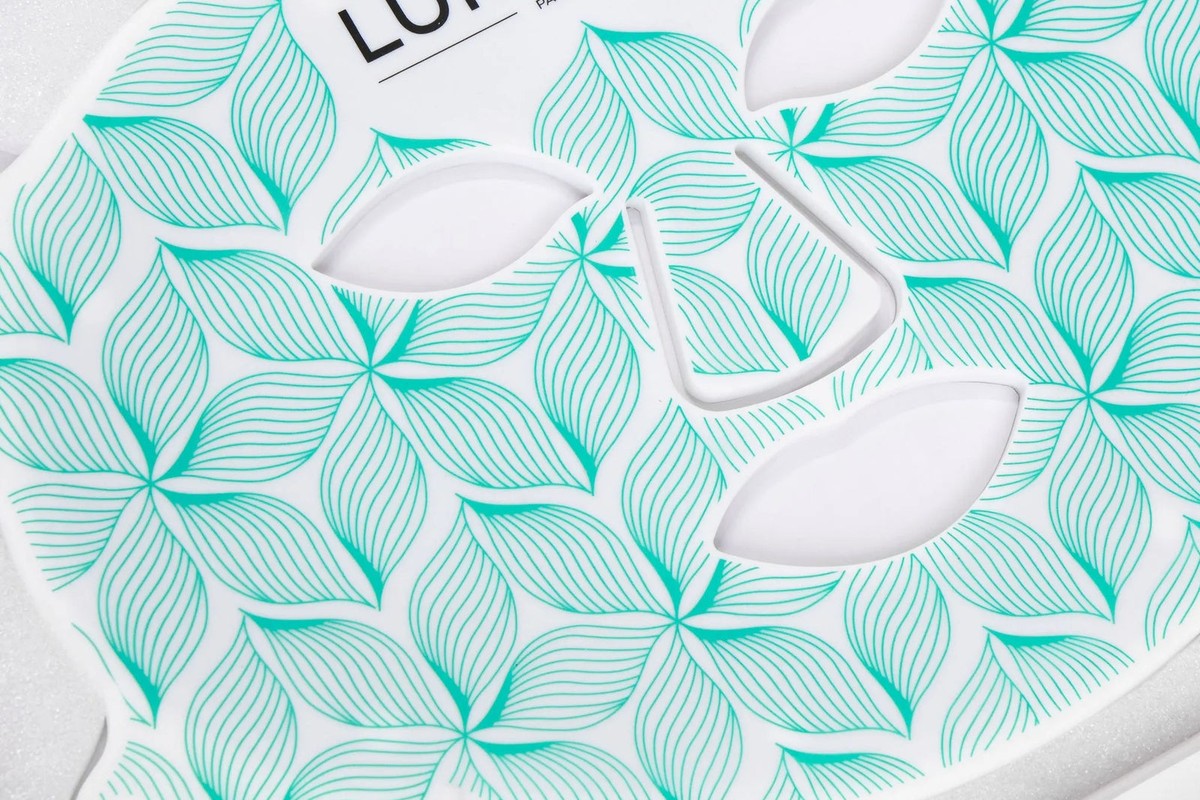
The honest position: red and near-infrared light at these wavelengths and these intensities is not considered hazardous to the eye, but it is bright, and bright is uncomfortable. Several masks have no eye cut-outs at all. Others, including ours, have silicone eye cups through which light still escapes if the mask is not pressed close.
Three of our own verified Amazon reviewers raise exactly this. One writes that it stopped the session being hands-free, because she had to hold the mask against her face. We would rather you read that here than discover it after paying.
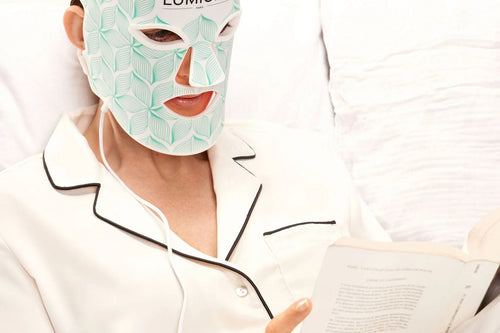
What we recommend: close your eyes and lie down. It is the most comfortable way to use any mask, and it turns the session into ten minutes of rest, which several buyers describe as the part they actually look forward to. If you are light-sensitive, any pair of LED therapy goggles works. Do not assume goggles are included, with any brand, unless the box says so.
How to choose, in six criteria
1. The wavelengths, before anything else
Red around 630 to 660 nm and near-infrared around 830 to 850 nm. If a mask does not publish its wavelengths in nanometres, that is your first red flag. Additional colors are a bonus.
2. The dose, not the headline
Ask for irradiance with its measurement distance, then multiply by session length. The reference trial sat at 8.5 to 9.6 J/cm² per session. A ten-minute session at around 27 mW/cm² lands just above that, at roughly 16 J/cm². A brand that cannot produce this is not measuring its own product.
3. Fit, which decides whether you keep using it
The best mask is the one you actually wear three to five times a week. Flexible silicone conforms to the face and can be worn lying down. Rigid shells photograph better and are harder to live with. Buyers who own more than one mask consistently say the same thing: the comfortable one is the one that gets used.
4. Session control
An adjustable timer and selectable intensity matter more than a long feature list. Fixed 30-minute cycles push you past the useful dose for no benefit.
5. What you are actually comparing it to
Most people price these masks against other masks. The more useful comparison is the one you were making before: a course of in-office facials. One verified buyer put it plainly, saying she had been curious about at-home light therapy for ages but balked at the spa prices. A single professional LED session often costs what a mask costs over a few months, and the mask does not need an appointment.
There is a second thing buyers mention that no spec sheet captures. Several describe the ten minutes as the part they look forward to: lying down, eyes closed, phone out of reach. If you have spent years buying creams that asked nothing of you and gave nothing back, a routine that forces you to stop for ten minutes is not a small thing.
6. Warranty and returns
Straps and controllers are the parts that fail. Check the warranty length and what it covers. Check the return window too, because you cannot know in a week whether a device suits you, and the evidence base runs on four to twelve weeks of consistent use.
How to actually use one
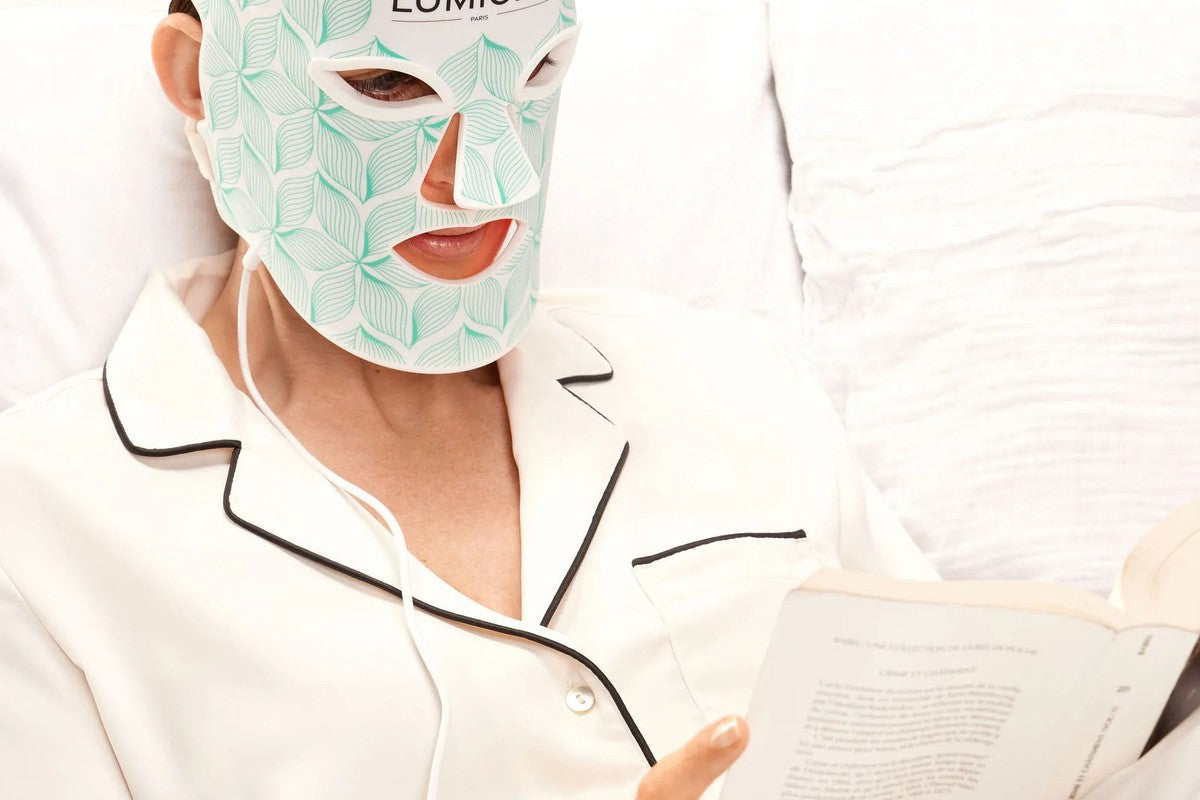
The protocol matters as much as the hardware, and it is where most people quietly waste their money.
- Clean, dry skin. Makeup, sunscreen and heavy oils sit between the light and your skin. Cleanse first and apply serums after.
- Ten minutes. Not thirty. At around 27 mW/cm², ten minutes delivers roughly 16 J/cm², inside the useful window. Doubling the time does not double the effect and can push you past the optimum.
- Three to five times a week. The trials that produced results ran two to five sessions a week over multiple weeks. Consistency beats intensity every time.
- Four to eight weeks before judging. Skin renewal takes time and collagen takes longer. Anyone promising a visible change in a week is selling you something.
- Eyes closed, lying down. More comfortable, and it removes the light leakage question entirely.
If your interest is a dull, tired complexion rather than lines specifically, we go deeper on the routine in our guide to restoring radiance to dull skin.
Where that leaves you
We opened by saying that no guide publishes the number that matters. Nine masks later, that still holds: not one publishes a dose in J/cm², and not one publishes the distance at which its irradiance was measured. Until they do, ask those two questions yourself before you pay, and remember that the mask that works is the one still on your face in week six.
Frequently asked questions
Do LED face masks actually work?
For the appearance of fine lines, firmness and evenness of tone, controlled trials support a measurable effect. Wunsch and Matuschka in 2014 found increased collagen density and significant improvement in the appearance of wrinkles against a control group. This is a real result on a real endpoint. Results are gradual, and they require weeks of consistent use rather than a single session. Anyone promising a transformation is going beyond what the evidence supports.
What is the most effective LED light wavelength?
For skin, red at roughly 630 to 660 nm for the surface and upper dermis, and near-infrared at roughly 830 to 850 nm for deeper penetration. Both are absorbed by cytochrome c oxidase in the mitochondria. Guides that quote wider ranges are not necessarily wrong, they are quoting different studies, which is why the recommendations you find online contradict each other.
How many mW/cm² does a good LED face mask need?
Far less than the marketing suggests. The most cited skin rejuvenation trial used 5.9 to 13.3 mW/cm². Documented working ranges run from roughly 5 to 50 mW/cm². Because the response is biphasic, more is not better: identical doses have produced an effect at 55 mW/cm² and none at 155. Ask for the dose in J/cm² and the measurement distance rather than chasing the biggest headline number.
Are LED face masks FDA approved?
No. None of them are. Some are FDA-cleared, which is a different and much lighter pathway: a 510(k) clearance establishes substantial equivalence to an existing device under Class II, 21 CFR 878.4810. It is a safety and equivalence review, not a verdict on efficacy, and these files often contain no clinical trial. Any brand writing "FDA approved" about a face mask is misrepresenting its status.
How often should I use an LED face mask?
Three to five sessions a week, ten minutes each, for at least four to eight weeks before assessing. Daily use is not harmful but adds little, and the evidence base is built on this kind of cadence rather than on maximum exposure.
Do I need to wear eye protection?
Red and near-infrared at these intensities are not considered hazardous to the eye, but the light is bright and can be uncomfortable. Closing your eyes and lying down solves it for most people. If you are light-sensitive, use LED therapy goggles. Check whether they are included, because with most brands they are not.
Is an expensive mask better than a cheap one?
Not reliably. The masks in this guide span $99 to $470, and where published specifications exist they sit within the same order of magnitude. What price does buy, sometimes, is comfort, build quality, warranty and a clearance filing. What it does not buy is a proportionally larger dose. Judge the specs, not the invoice.
Keep reading
- Dull skin: seven things that actually restore radiance, including where LED fits in an evening routine.
- How red light works at the cellular level, the mitochondrial mechanism explained without the marketing.
- Red light and hair, a different application of the same wavelengths, with its own protocols.
Ready to stop comparing headline numbers?
Extra 10% off with the code LUMIGLO10
630 nm and 850 nm, around 27 mW/cm², roughly 16 J/cm² per ten-minute session. A general wellness device, not FDA-cleared, and we say so.
$249 $159 · free US shipping · 30 days to try it · 2-year warranty
Sources: Wunsch A, Matuschka K. A controlled trial to determine the efficacy of red and near-infrared light treatment in patient satisfaction, reduction of fine lines, wrinkles, skin roughness, and intradermal collagen density increase. Photomed Laser Surg. 2014;32(2):93-100. Zein R, Selting W, Hamblin MR. Review of light parameters and photobiomodulation efficacy: dive into complexity. J Biomed Opt. 2018;23(12):120901. Huang YY, Chen ACH, Carroll JD, Hamblin MR. Biphasic dose response in low level light therapy. Dose-Response. 2009;7(4):358-383. Manufacturer specifications and public FDA 510(k) filings, consulted July 2026. This article is informational and is not medical advice. Lumiglo devices are general wellness devices and are not intended to diagnose, treat, cure or prevent any disease.